FRCOphth & FRCS Ophthalmology Exam Preparation
Structured, mentor-led preparation for every stage of the FRCOphth pathway and the FRCS Ophthalmology (Edinburgh/Glasgow) route — Part 1 Written, Refraction Certificate, Part 2 Written, and Part 2 Oral/Part 3 Viva.
Academic Partners
Structure of examinations
What is FRCOphth?
To be awarded FRCOphth, candidates must pass four examinations: Part 1 Written (basic sciences and optics), the Refraction Certificate (practical refraction OSCE), Part 2 Written (clinical ophthalmology MCQ), and Part 2 Oral (structured viva and OSCE). These are sequential, with each stage having specific prerequisites.
FRCS Ophthalmology (Edinburgh/Glasgow) is the intercollegiate surgical fellowship qualification. Its Part 1 Written closely mirrors FRCOphth Part 1, and its Part 2 Written closely aligns with FRCOphth Part 2 Written. The FRCS Part 3 Viva is equivalent to FRCOphth Part 2 Oral. PrepMedico’s programmes are designed to support candidates across both pathways.
- UK & International candidates
- 4 sequential examinations
- Both FRCOphth & FRCS covered
- Online proctored where available
Select your current stage and move step-by-step through your exam pathway.
Select the option that matches your current exam stage. Each links directly to the relevant course page.
FRCOphth Part 1 / FRCS Ophthalmology Part 1
Part 1 Written Course
Part 2 Written Course
Refraction Certificate (Practical OSCE)
Refraction Certificate Course
FRCOphth Part 2 Oral / FRCS Ophthalmology Part 3 Viva
Viva Course
Why PrepMedico
PrepMedico is built differently — and the results reflect it.
Recently Successful Faculty
One Course. Two Pathways.
Focused, Small Cohorts
Practice-Centred Learning
Flexible Learning, On Your Terms
Spotlight
What’s on Spotlight?
Our Performance at a Glance
Delivering consistent, high-quality outcomes across cohorts through structured mentorship and exam-focused training.
Understand the Exam & What to Prepare
Hold a primary medical qualification that is accepted by the General Medical Council (GMC).
Have completed a minimum of 2 years post-qualification experience, including 1 year in pre-registration training.
Geometrical optics, refraction principles, optical instruments, lenses, prisms, contact lenses, laser physics.
Highest MCQ frequencyStudy design, hypothesis testing, data interpretation, clinical trials, sensitivity & specificity, evidence-based medicine.
Commonly underestimatedOcular physiology, aqueous humour dynamics, retinal physiology, lacrimal system, IOP regulation, corneal physiology.
Core scienceMechanisms of ophthalmic drugs, pharmacokinetics, genetics principles, ocular investigations and their interpretation.
Cross-topicOphthalmic pathology, ocular microbiology, immunological mechanisms, inflammatory disease, tumour pathology.
Frequently testedOrbital anatomy, cranial nerve anatomy, blood supply, embryological development of the eye and adnexa.
High-yieldRetinal diseases including macular disorders, vascular retinal disease, retinal detachment, and vitreoretinal interface disorders. Professional ethics, clinical governance, and guideline-based decision making.
High-frequency clinical topicsNeuro-ophthalmic disorders including optic neuropathies, visual pathway lesions, and pupillary abnormalities. Oculoplastic conditions including eyelid disorders, lacrimal system disease, and periocular pathology.
Core clinical areaCorneal diseases, ocular surface disorders, infections, keratoconus, and corneal dystrophies. Cataract types, surgical principles, lens pathology, and postoperative complications.
Surgical fundamentalsChildhood eye disorders, amblyopia, paediatric cataract, and congenital conditions. Strabismus assessment and management, orbital disease including inflammatory, vascular, and neoplastic pathology.
Common exam scenariosOphthalmic investigations including OCT, visual fields, angiography, and electrophysiology. Glaucoma pathophysiology, diagnosis, and management, with supporting clinical science.
Clinical interpretationInflammatory eye diseases, classification of uveitis, and systemic associations. Ocular tumours and oncology principles. Systemic diseases affecting the eye and ophthalmic manifestations of general medicine.
High-yield clinical integrationThe FRCS Part 3 does not include AER or Health Promotion components. The oral element uses 3 × 20-minute structured sessions rather than 5 × 10-minute viva stations. The clinical element consists of 4 examination stations with no separate Communication Skills station.
Meet our Faculty

Ms Swetha Ravichandran
MS, FMRF (cornea), FRCOPHTH

Ms Riddhi Thaker
MBBS, BSc, FRCOphth, FEBO

Ms Shruthy Vaishali Ramesh
MS, DNB, FRCOphth, FAICO

Dr. Shreyans Jain
MD , FRCS (Glasgow), FRCOphth, FICO, DNB, FAICO

Ms Rachana Shah
MBBS, MS, FRCOphth

Ms Sapna Sinha
MBBS, MS, FRCS (Glasgow), FRCOphth,
MRCS (Edinburgh), FICO

Dr. Nizma Razick
MBBS, MD (Ophthalmology)

Dr. Saad Bin Sohail
FCPS, FRCOphth

Dr. Rehan Naqaish
MBBS, FCPS, FRCOphth, Cert LRS
Honorary faculty

Dr Sonali Gupta
MS, FRCS(Glasgow), FRCOphth, FICO, DNB

Dr. Aahan D Shah
MBBS, MS (Gold), FICO, FRCOphth
Find Your Course
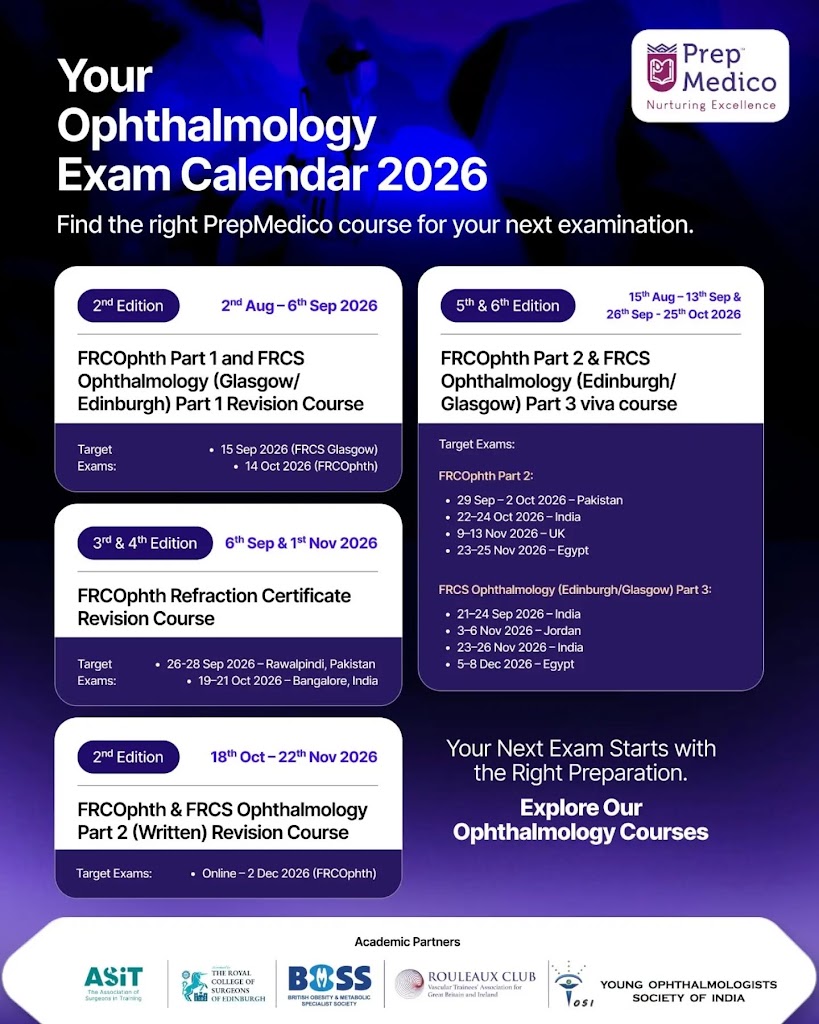
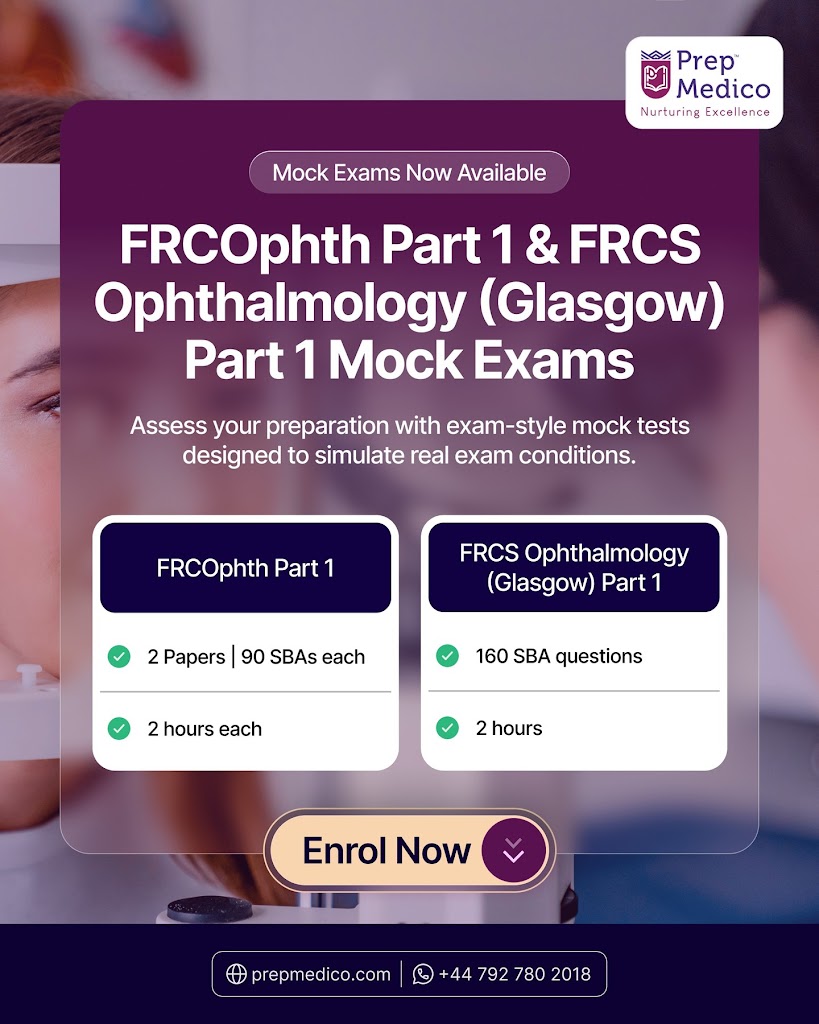
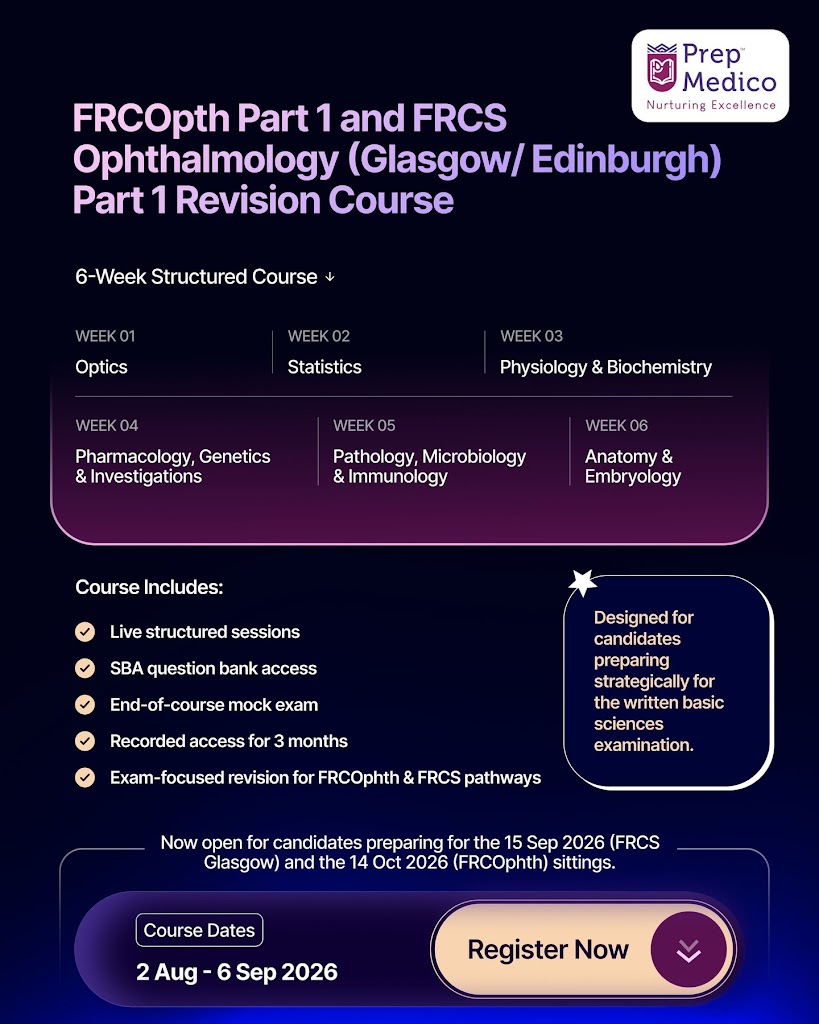
FRCOphth Part 1 and FRCS Ophthalmology (Glasgow/Edinburgh) Part 1 Revision Course
6-week structured MCQ preparation covering the full basic sciences syllabus — optics, anatomy, physiology, pharmacology, pathology, statistics, and embryology. Both pathways in one course.
View courseFRCOphth Part 2 Written & FRCS Ophthalmology Part 2 Written Revision Course
6-week clinical ophthalmology MCQ preparation covering retina, glaucoma, cornea, cataract, paediatrics, neuro-ophthalmology, uveitis, ocular oncology, and systemic medicine. Both pathways in one course.
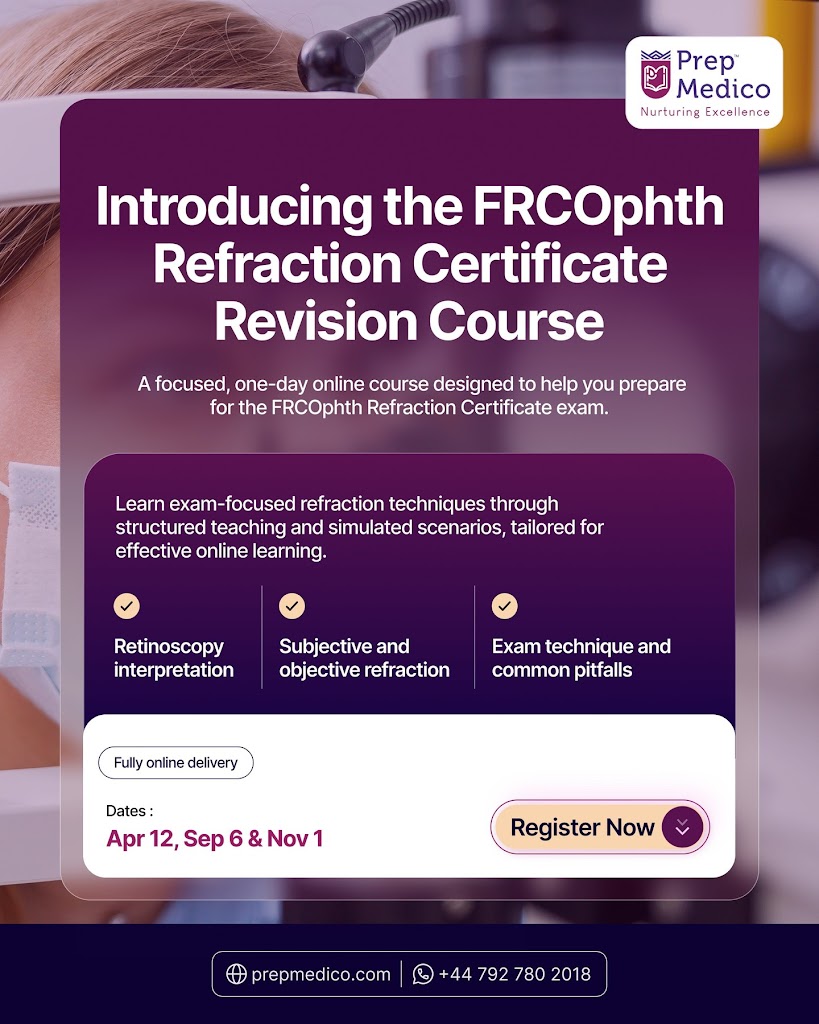
View courseRefraction Certificate — Practical OSCE Intensive Revision Course
Focused one-day intensive online course covering retinoscopy techniques, subjective refraction practice, OSCE-style scenarios, and examiner-focused strategies for the Refraction Certificate examination.
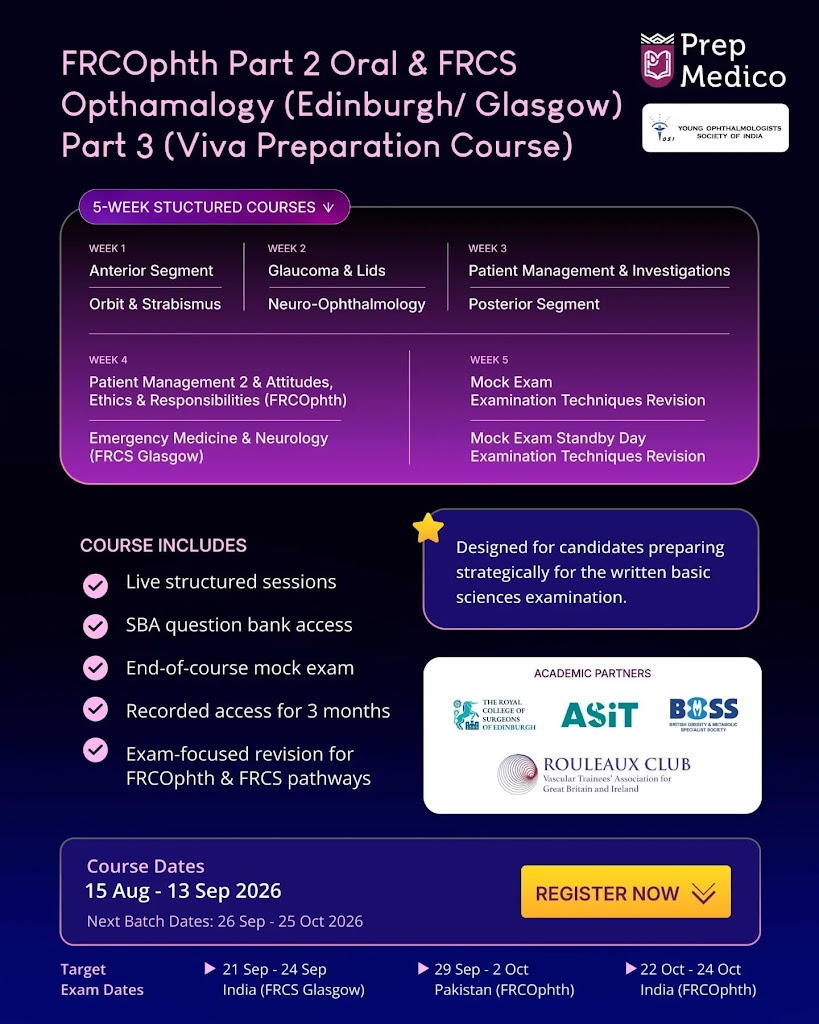
View courseFRCOphth Part 2 Oral & FRCS Ophthalmology (Edinburgh/Glasgow) Part 3 Viva Course
4-week intensive viva and OSCE preparation. All subspecialty viva practice, 1-to-1 mock viva, 1-to-1 mock OSCE, dual-track Week 4 (AER/HP for FRCOphth; Neurology/General Medicine for FRCS).
View course
What is the difference between FRCOphth and FRCS Ophthalmology?
FRCOphth is awarded by the Royal College of Ophthalmologists (RCOphth) and represents the primary professional qualification in ophthalmology in the UK training pathway.
FRCS Ophthalmology is the intercollegiate surgical fellowship awarded by the Royal College of Surgeons of Edinburgh and the Royal College of Physicians and Surgeons of Glasgow.
Both examinations assess similar clinical knowledge and competencies in ophthalmology, although their examination structures differ slightly.
PrepMedico’s Part 1 Written and Part 2 Oral preparation courses are designed to cover both pathways simultaneously.
How many exams do I need to pass to obtain FRCOphth?
Four examinations must be completed:
• Part 1 Written
• Refraction Certificate
• Part 2 Written
• Part 2 Oral
Each examination has its own eligibility requirements and prerequisites. PrepMedico offers dedicated preparation courses for each stage of the examination pathway.
In what order must I take the FRCOphth examinations?
Candidates must first pass Part 1 Written.
After that, Part 2 Written and the Refraction Certificate may be taken in any order.
Both must be passed before a candidate becomes eligible to sit the Part 2 Oral examination.
Can international medical graduates sit the FRCOphth exams?
Yes. FRCOphth is open to international medical graduates (IMGs).
Many candidates preparing for the examination are based outside the UK. PrepMedico courses regularly support candidates appearing at international exam centres such as Bangalore, Amman, Cairo, Kuala Lumpur, Delhi, Pakistan, and other locations.
Do I need UK training to sit the FRCOphth exams?
What is the PrepMedico Library Subscription?
It is designed for candidates who:
• cannot attend live sessions
• want flexible self-paced revision
• want access to structured exam-focused teaching recordings
Which exam should I take — FRCOphth or FRCS Ophthalmology?
Most candidates pursuing UK training follow the FRCOphth pathway, as it aligns directly with the Royal College of Ophthalmologists training curriculum.
FRCS Ophthalmology is an intercollegiate surgical fellowship and may be pursued by candidates seeking a surgical fellowship qualification.
Because the syllabus overlap is significant, preparation strategies are often similar.
How difficult are the FRCOphth examinations?
They test:
• applied clinical knowledge
• examination interpretation
• clinical decision making
• understanding of ophthalmic investigations
• safe patient management
Structured preparation and regular practice with exam-style questions and viva discussions are essential.
How long does it usually take to complete the FRCOphth pathway?
For most candidates the pathway typically takes 2–3 years, depending on preparation time, exam availability, and progression through each stage.
Are PrepMedico courses live or recorded?
Recordings are provided for revision through the PrepMedico digital learning platform.
Who teaches the PrepMedico courses?
Frequently Asked Questions
How PrepMedico prepares you
Ready to Ace your FRCOpth / FRCS ophthalmology?
Join hundreds of successful fellows. Start your preparation with the experts today.